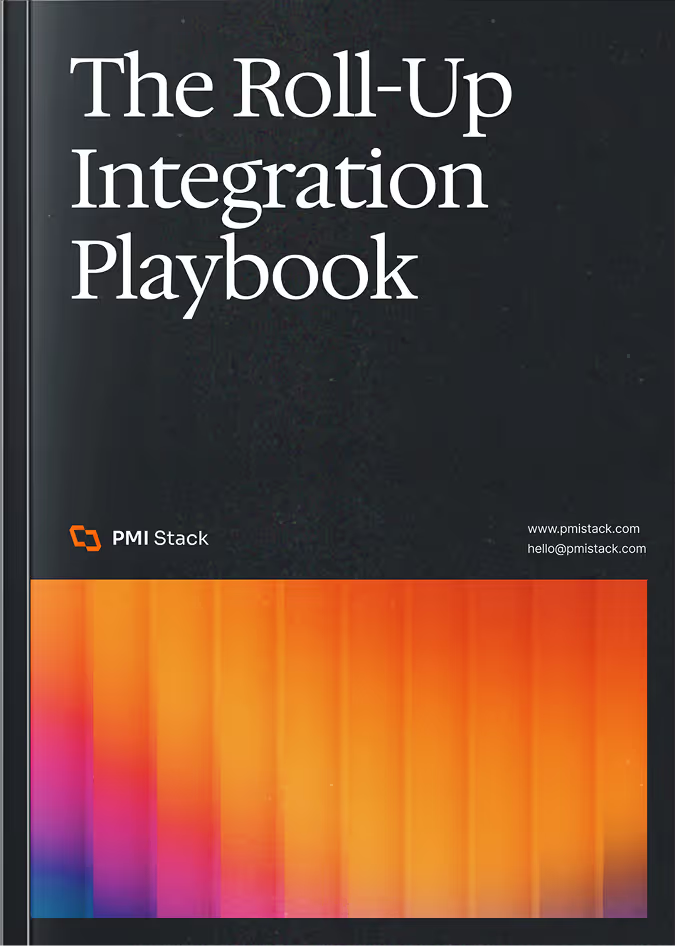


Download our Free Roll-Up Integration Playbook
Step-by-step integration checklists
Real mistakes that derail rollups
Proven templates you can use immediately
Built from interviews with 20+ rollup operators
We help serial acquirers and roll-ups do two things: build live consolidated reporting across every entity, and unify the systems behind acquired companies.

Live financial and operational data across your entire portfolio, pulled from your acquisitions' existing systems. No system changes. No manual exports.
.png)
Post-acquisition systems integration. We migrate and unify the systems that matter: CRM, ERP, email, file storage. Phased, tested, and handed off cleanly.
Your IT team is keeping operations running. They don't have bandwidth or specialist migration skills for unification work.
New systems imposed without context. Morale drops, key people leave.
Different accounting systems, different charts of accounts. Consolidating means manual exports and reconciliation, every quarter.
Consolidation software and migration tools are rigid and built for one-size-fits-all groups. They don't adapt to how your portfolio is actually structured.

of IT integrations fail or have significant issues (Gartner, 2024)
of employees leave within Year 1 — 3.6× normal turnover (EY, 2024)
of deal value lost from slow IT integration (Valorem Reply, 2023)
Whether you're presenting to the board, raising debt, or briefing investors, the difference between gut-feel and live data shows up in every conversation.
“We thought decentralisation was safer — let each company keep their autonomy. But the fragility of a small business is high. It turns out it's safer when you centralise more. Your risk is much lower. You can drive best practice across people much greater.”

“The most expensive mistake a roll-up makes is not standardizing the chart of accounts early. It blows up at audit time. Suddenly you're trying to reconcile multiple definitions of revenue and margin across entities, under pressure, with scrutiny from external parties.”

“The first thing we do when we buy a company is implement our ERP. Data invisibility is a critical issue — we have to ask those people to change the ERP. In some cases, we completely need to change it.”

We start with a discovery call. Then we audit. Then we execute in phases, with your team, not around them.
Post-go-live troubleshooting, refinement, and prep for your next acquisition.
Don't see your software? We work with most business systems - if it has data, we can migrate it.















Field notes on consolidation, migration risk, and reporting patterns.
.png)
.png)
Operator conversations about what breaks after acquisition.
Whether you're three acquisitions in or planning your first, let's talk. We'll discuss your current systems, your reporting needs, and your integration priorities. We'll be straight about what's worth doing now, what to phase, and where to start.
No pitch. No pressure. Just a clear conversation.
Maybe - if they have bandwidth and specialized migration skills. Most IT teams are swamped keeping operations running. We handle the project work they don't have time for, working with your IT team (not around them).
Rough timelines: Email/file migration takes 2-4 weeks. CRM/ERP data migration takes 8-12 weeks. Full platform unification takes 3-6 months. After Discovery, we'll give you a realistic timeline based on what we actually find.
We test everything before go-live, have rollback plans, and stay close post-migration to catch issues fast. When something does go wrong (and occasionally it will), we're responsive and transparent. The goal isn't zero issues - it's catching them before they impact the business.
Discovery phase is fixed-fee. Execution phase is project-based pricing we provide after Discovery. No hourly billing that drags on. You get a clear price for defined scope - no surprises.
Dev shops are great for building software, but integration is different. They need perfect specs upfront and treat it like a coding project. Real integration is messy - workflows aren't documented, data doesn't match schemas, business logic varies across companies. We understand the business context and adapt as we learn.
We hear that a lot. The difference is we execute, not just advise. We don't hand you a strategy deck and leave - we migrate the data, train the teams, and stay through go-live. You're working with us directly, hands-on, until it's done.