

Download our Free Roll-Up Integration Playbook
Step-by-step integration checklists
Real mistakes that derail rollups
Proven templates you can use immediately
Built from interviews with 20+ rollup operators
Post-acquisition systems integration. We migrate and unify the systems that matter - CRM, ERP, email, file storage. Phased, tested, and handed off cleanly.

New systems imposed without context. Morale drops, key people leave. The integration fails culturally before it succeeds technically.
Dev shops need perfect specs and treat it as a coding project. Consultants write strategy decks and disappear. Neither understands the messy reality of M&A.
Your IT team is keeping operations running. They don't have the specialist skills or dedicated time for complex migration projects.
Integrations drag on for+12 months. Financial data stays trapped. Security risks accumulate. The backlog grows with every deal.
of IT integrations fail or have significant issues (Gartner, 2024)
of employees leave within Year 1 — 3.6× normal turnover (EY, 2024)
of deal value lost from slow IT integration (Valorem Reply, 2023)
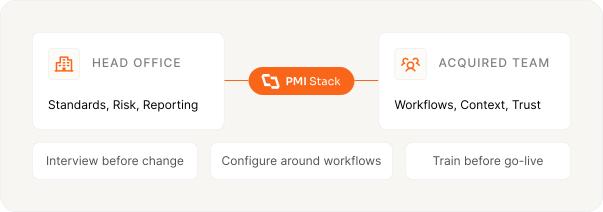
The hardest part of integration isn't the technology: it's the people. We interview acquired teams before changing anything. We explain why, not just what. We configure systems around their workflows, not against them.
The Result: Key people stay. Adoption sticks. The integration succeeds culturally, not just technically.
“70 to 90% of acquisitions fail to reach their strategic or financial objectives. It's the people. If people are not aligned, everything crumbles.”
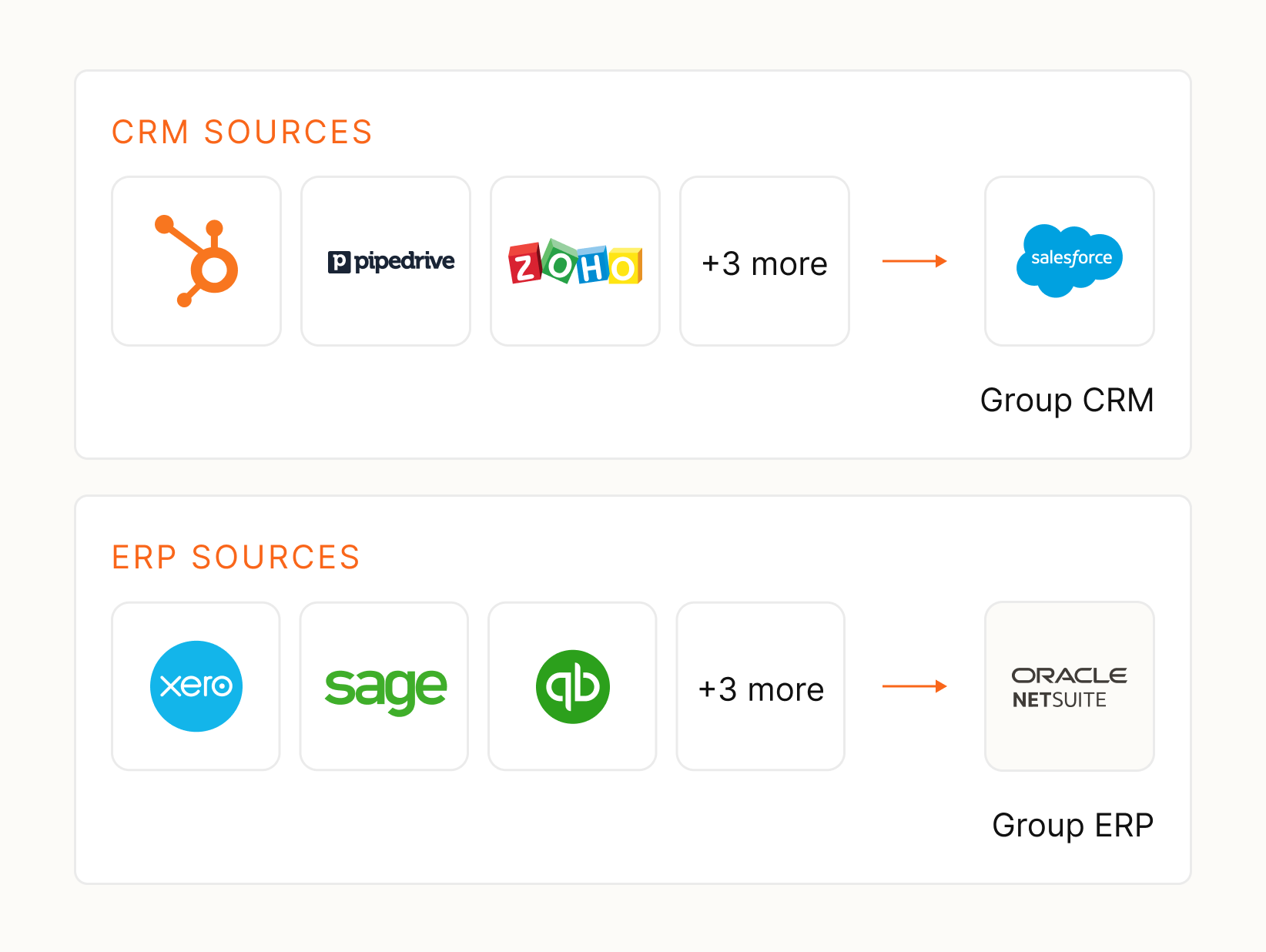
Clean, deduplicated data in your group's chosen platforms: customer records, financials, pipelines, and operational data mapped to your standards and migrated into a single CRM and ERP.
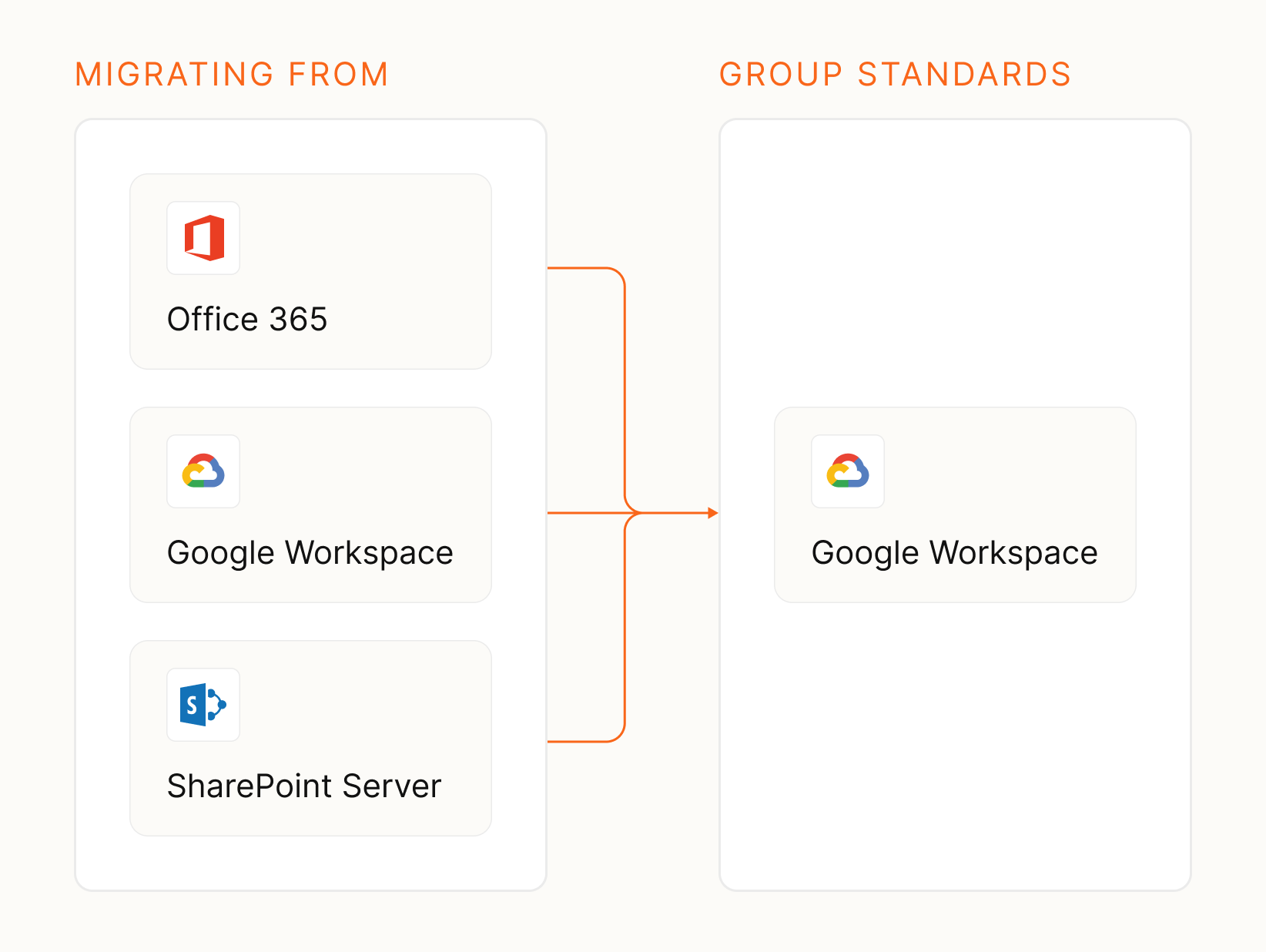
Email and file migration is often the first integration employees feel. We migrate email, calendars, contacts, file storage, and permissions - with zero downtime and minimal disruption.
Systems are only half the job. We document how each acquired company actually works, configure the group platform to support their workflows, and train their teams so adoption sticks.

“We thought decentralisation was safer — let each company keep their autonomy. But the fragility of a small business is high. It turns out it's safer when you centralise more. Your risk is much lower. You can drive best practice across people much greater.”

“The most expensive mistake a roll-up makes is not standardizing the chart of accounts early. It blows up at audit time. Suddenly you're trying to reconcile multiple definitions of revenue and margin across entities, under pressure, with scrutiny from external parties.”

“The first thing we do when we buy a company is implement our ERP. Data invisibility is a critical issue — we have to ask those people to change the ERP. In some cases, we completely need to change it.”

Don’t let acquisitions linger on legacy systems. Integrate fast with a proven, phased process and a clean handoff.
Parallel testing, phased migration, and training before go-live. Operations never skip a beat during the transition.
We bridge head office and acquired companies so teams feel supported, not forced: helping retain key people and trust.
Every acquisition left on its own legacy stack is a security risk and an operational blind spot. Unification closes both
Each integration refines the playbook for the next one. Acquisition #8 is faster and cheaper than acquisition #3.
Unified systems mean unified data. Decisions come from real numbers across entities, not gut feelings or stale sheets.
Audit systems, map workflows, identify risks, build integration roadmap.
Migrate data, unify systems, train users - in phases, not all at once.
Post-go-live troubleshooting, refinement, and prep for your next acquisition.
Post-go-live troubleshooting, refinement, and prep for your next acquisition.
Don't see your software? We work with most business systems - if it has data, we can migrate it.
















A 30-minute discovery call is all it takes. We'll talk through your current systems, your integration priorities, and what a realistic timeline looks like. We'll tell you what we can handle and what you should keep in-house.
No pitch. No pressure. Just an honest conversation about what it takes.

Maybe - if they have bandwidth and specialised migration skills. Most internal IT teams are stretched thin keeping operations running. We handle the complex project work they don't have time for, working with your IT team, not around them.
It depends on scope. Email and file migration: 2–4 weeks. CRM/ERP data migration: 8–12 weeks. Full platform unification across multiple entities: 3–6 months. We'll give you an honest estimate after Discovery - anyone promising faster is cutting corners.
We test everything in parallel environments before go-live, and we have rollback plans for every migration. When issues come up, we catch them fast and fix them before they impact operations.
We execute, not advise. We don't hand you a strategy deck and disappear - we migrate the data, configure the systems, train the teams, and stay through go-live. Hands on keyboard until it's done.
Dev shops need perfect specs and treat integration as a coding project. Real integration is messy — workflows aren't documented, data doesn't match schemas, business logic varies across companies. We understand the business context and adapt as we learn.
No. We prioritise what matters most and roll out in phases. Quick wins first, complex migrations later. You control the pace.
The playbook is already built. We apply the same process: audit, clean, migrate - but faster, because we already know your group platform, your standards, and your workflows.
It's a service. We're hands-on technical operators, not a SaaS platform. The value is in the judgment, the execution, and the understanding of M&A context: not a product licence.
Thanks for reaching out. We will review your submission and get back to you within 24–48 hours.
